
Why most AI strategies fail (and how to fix yours)

Every week, there’s another headline about how AI will transform business. CEOs are hearing “adopt AI or fall behind.” Vendors are slapping AI badges on everything. 


And somewhere in the middle of all this noise, business leaders are asking a totally reasonable question: Where do we even start?


I’ve spent years helping companies implement NetSuite ERP systems, and here’s what the AI hype cycle rarely acknowledges: AI is only as smart as the data and systems it runs on.


Most companies aren’t failing at AI because they picked the wrong tool. They’re failing because their foundational infrastructure—the data, the processes, the systems—isn’t ready to support it. 


The good news? That’s fixable. Let’s talk about how.

The AI Readiness problem nobody talks about

When I sit down with a new client to implement NetSuite, I’m not just configuring software. I’m helping them untangle years of disconnected spreadsheets, manual workarounds, and siloed departments that have never shared a common system of record.


Sound familiar? These are the same barriers that stop AI initiatives dead in their tracks. Here’s the uncomfortable truth: AI doesn’t fix messy data… it amplifies it. Feed an AI inconsistent or incomplete data, and you’ll get confidently wrong answers at scale.


Before jumping into AI, companies need to evaluate five foundational pillars honestly.

The 5 Pillars of AI Readiness

1) Clean, Centralized Data


This is the big one. AI models learn from data, make predictions from data, and generate insights from data. If yours is scattered across a dozen systems with no single source of truth, your AI investment will underperform. Quick gut check: Can you pull a report right now that gives you accurate, real-time visibility into your business? Are your records clean—consistent naming, no duplicates? 

If not, start here. An ERP assessment or optimization is often the right first step because it addresses the data governance challenges posed by AI.

2) Documented Processes


AI can automate workflows—but only workflows that actually exist. I’ve seen companies struggle to implement AI-powered invoice processing because nobody had ever documented the approval workflow in the first place.

If your team handles the same transaction six different ways depending on who’s working, there’s no pattern for AI to learn from. Before adding AI, make sure your core processes are documented, followed consistently, and not living in someone’s head.

3) Systems That Talk to Each Other


AI tools need to connect to your business systems to be useful. A demand forecasting AI is worthless if it can’t pull live inventory data. A customer service AI is frustrating if it can’t see real order history.

Modern ERPs like NetSuite are built with integration in mind. But if your stack is a collection of standalone tools that don’t communicate with each other, AI will only compound that isolation. Can you track a customer from first contact through final payment in one connected view? That’s the bar.

4) Organizational Buy-In


Technology is the easy part. People are the challenge.


I’ve watched ERP implementations fail not because of bad software, but because employees didn’t trust the system and leadership didn’t reinforce adoption. AI is no different. You need leaders who champion the initiative, employees who understand what AI does and doesn’t do, and a culture that treats AI output as a starting point for human judgment—not a replacement for it.

5) A Governance Framework


AI introduces risk—around data privacy, compliance, and auditability. Even outside regulated industries, you need to answer ”who’s accountable when the AI is wrong?” before something goes wrong.

Keep it simple: What data can AI access? Who reviews outputs for accuracy? Can you trace why a recommendation was made?

In NetSuite implementations, we always establish this kind of governance. AI follows the same logic.

Why your ERP is your AI foundation

Your ERP isn’t just an accounting tool—it’s your business’s operational nervous system. It holds your financial, customer, vendor, and inventory data and connects them all together.


AI initiatives built on a well-implemented ERP have a huge structural advantage: the data is already centralized, clean, and integrated. Without that foundation, AI projects often become expensive data-cleaning exercises in disguise. Bottom line: if you’re serious about AI, investing in your ERP infrastructure isn’t just a prerequisite—it is your AI strategy, at least at the start.

A realistic AI roadmap

For most mid-market companies, AI readiness is a progression, not a switch you flip. 

Here’s how I think about it:

  • Phase 1: Foundation (Months 1–6)
    Implement or optimize your ERP, establish data governance, document core processes, and clean existing data.
  • Phase 2: Automation (Months 6–12)
    Add rule-based automation for repetitive processes, build integrations, identify high-value AI use cases, and start building AI literacy.
  • Phase 3: Intelligence (Months 12–24)
    Deploy AI in targeted areas (forecasting, anomaly detection, document processing), establish governance, and measure outcomes.
  • Phase 4: Embedded AI (Ongoing)
    AI becomes standard in workflow design, teams use AI insights regularly, and continuous improvement loops keep models up to date.

So… are you ready? 

Most companies are somewhere in Phase 1 or early Phase 2. That’s not a failure—it’s a starting point. The mistake is skipping the foundation and jumping to Phase 3 because a competitor announced an AI pilot.


The companies that will win with AI aren’t necessarily the ones that moved fastest. They’re the ones who built the infrastructure to move well—with clean data, integrated systems, and a team that treats AI as a tool, not a magic box.


If you’re not sure where you stand, contact us today to get started with an honest audit of your data and systems. That conversation alone usually surfaces the real obstacles—and often reveals that the path to AI readiness runs directly through the ERP work you’ve been putting off. You’ll know exactly what to fix first, what it will cost, and what results to expect.


The best time to build your AI foundation was five years ago. The second-best time is now.

Healthcare growth is breaking legacy systems—here’s what you can do about it

Every healthcare organization says the same thing: “We’re focused on patient care.” And they mean it.

But here’s the hard truth: it’s almost impossible to maintain that focus when your finance team is drowning in manual reconciliations, your leadership can’t get clean financial data until three weeks after month-end, and your systems don’t talk to each other.


Healthcare is one of the most operationally complex industries on the planet. Hospitals, FQHCs, behavioral health groups, specialty pharmacies, outpatient clinics, home health organizations—they are all navigating a web of regulations, reimbursement models, and compliance requirements that never seem to get simpler. 


And they’re expected to do it with systems built for a different era.


What does modernizing your back office look like? And why does it matter so much right now?

The pressure on healthcare operations

The operational challenges facing healthcare leaders aren’t new, but a few trends are making them a lot harder to ignore: 

  • Value-based care is changing how you get paid: The shift from fee-for-service to outcomes-based reimbursement sounds good in theory. In practice, it means you need granular visibility into Cost Per Patient, Cost Per Service Line, and payer-level profitability⁠—data that most legacy financial systems simply can’t surface. If you can’t see where you’re making and losing money, it’s very hard to make good strategic decisions.
  • Administrative complexity keeps compounding: Prior authorizations, claims management, 340B compliance, Medicare and Medicaid reporting—administrative burdens on healthcare organizations are substantial and growing. When these processes run through disconnected systems or rely on manual workarounds, errors multiply, and staff time is consumed by tasks that could be automated.
  • Growth is creating operational fragmentation: Mergers, acquisitions, and multi-location expansions have become standard strategies in healthcare. But growth that outpaces your systems creates real problems. When every new entity or location runs on a different set of spreadsheets and legacy tools, consolidating financial data becomes a full-time job⁠— and even then, you’re never quite sure you have the whole picture.
  • Workforce costs demand smarter resource planning: Staffing shortages and rising labor costs aren’t going away. Leaders need real-time visibility into labor utilization, departmental margins, and cost drivers—not a report that takes two weeks to pull together. The organizations that can see this data clearly are the ones that can respond faster and make better decisions.
  • The bar for financial insight has risen: Healthcare executives are under increasing pressure to make fast, data-driven calls on service lines, payer mix, capital investments, and patient populations. That requires unified, accurate data⁠—not a patchwork of exports from five different systems that your analyst spends a weekend reconciling.

Why healthcare organizations are turning to Cloud ERP

Cloud ERP platforms⁠ (and NetSuite in particular⁠) have emerged as the infrastructure layer that ties everything together. Instead of bolting on tool after tool and hoping the integrations hold, a unified ERP provides healthcare organizations with a single place for finance, operations, compliance, and reporting. Here’s what that actually looks like in practice.

  • Real-time financial visibility: Delayed financial closeouts and fragmented reporting are common pain points. When data lives across multiple systems and requires manual consolidation, finance teams spend time assembling numbers rather than analyzing them. NetSuite centralizes financial data so leadership can access dashboards in real time, close faster, and actually understand revenue and cost by program, location, or payer.
  • Multi-entity and multi-location management that doesn’t break: For organizations managing multiple legal entities, states, or service locations, consolidating the books while keeping entity-level detail is genuinely hard. NetSuite handles this natively⁠, which is particularly valuable for growing behavioral health groups, specialty pharmacy networks, or regional provider organizations that are adding entities faster than their systems can keep up.
  • Compliance and audit-readiness built in: Regulatory compliance in healthcare is not optional, and it’s not getting any easier. NetSuite’s audit trails, role-based access controls, and configurable workflows create the internal controls structure that regulators and auditors expect. For organizations involved in government reimbursement or grant-funded services, having a system that enforces process discipline isn’t just a nice-to-have—it’s essential. (And yes, NetSuite has a HIPAA attestation.)
  • Automation that frees your team to do more meaningful work: Billing reconciliations, expense allocations, and financial close activities⁠—these are the kinds of tasks that eat up finance and operations teams when they’re done manually. NetSuite automates these workflows, saving time and improving efficiency. It reduces errors and gives your team space to focus on the work that actually moves the organization forward.

A platform that scales with you: One of the biggest risks in healthcare growth is outgrowing your systems. NetSuite’s cloud architecture is designed to scale, adding new modules, entities, or capabilities without the disruptive overhauls that legacy on-premises systems require. Whether you’re expanding organically or through acquisitions, the platform grows with you.

Implementation is where most ERP projects succeed or fail

Here’s something worth saying plainly: the ERP platform matters, but so does how it’s implemented. 

A poorly designed implementation can leave you with a powerful system that doesn’t actually work for your organization. A well-designed one can genuinely transform how you operate.

Caravel specializes in NetSuite implementations for healthcare organizations. That means we’ve done this before: across behavioral health providers, specialty pharmacies, healthcare services organizations, and more. Each sub-sector has its own operational quirks, compliance requirements, and reporting needs, and we bring that context to every engagement.

  • We design the system around how you actually work: A generic ERP configuration built by someone without healthcare experience often creates workarounds almost immediately. We start by understanding your workflows, reporting requirements, and compliance obligations⁠, and then configure NetSuite to support them. That includes designing charts of accounts aligned with your service lines, setting up automated revenue and cost allocation rules, and building the reporting structures your leadership team actually needs.
  • We connect your ecosystem, not just your ERP: Most healthcare organizations run multiple systems. We help integrate these systems with NetSuite, enabling financial and operational data to flow without manual intervention. The goal is a single source of truth for leadership, not another data siloing problem.
  • Adoption is part of the project, not an afterthought: Technology doesn’t transform organizations; people do! We work closely with your teams through change management, training, and workflow alignment to ensure the system is actually used (and used well). An ERP investment that your staff has to work around isn’t an investment; it’s a sunk cost.
  • We stay engaged after go-live: Healthcare organizations don’t stop evolving after implementation. New service lines, regulatory changes, acquisitions⁠—the landscape keeps shifting. Caravel provides ongoing advisory and optimization services to keep your NetSuite environment in step with your business. The best implementations aren’t set-and-forget; they’re living systems that improve over time.

The bottom line

Healthcare organizations are under more pressure than ever—financial, regulatory, operational, and more. Those who navigate it well tend to have one thing in common: they’ve stopped accepting fragmented systems, manual processes, and delayed data as just part of doing business in healthcare.

Modernizing your back office isn’t about chasing new technology. It’s about building the operational foundation that lets your organization focus on what you’re there to do. When your finance and operations teams have the visibility, tools, and automation they need, they spend less time firefighting and more time enabling better care.

Ready to explore your options?

Contact us today to speak to our team of healthcare ERP experts. Whether you’re just starting to evaluate options or ready to move forward, we’re happy to walk through what modern financial operations could look like for your organization.

Adapting to New Tariffs: How to Maintain Margin and Compliance Using NetSuite

The global trade landscape is experiencing significant disruption in 2025, with recent tariff changes creating waves across supply chains worldwide.


These tariff increases have created an average tax increase of nearly $1,300 per U.S. household in 2025, according to the Tax Foundation. For businesses that rely on international suppliers, the impact is even more dramatic:

  • Higher landed costs affecting profit margins
  • Disrupted supply chains and delivery timelines
  • Increased compliance requirements and documentation
  • New pricing pressures from customers resistant to absorbing the costs

For CFOs and operations leaders, this rapidly changing trade environment demands nimble responses and strategic planning. Companies need systems that can provide real-time visibility into tariff impacts and help model various scenarios to maintain profitability.


According to NetSuite, the cloud ERP market is expected to grow from $72.2 billion in 2023 to $130.5 billion by 2028, with the volatility of international trade being a key driver of adoption (NetSuite, 2025). Gartner reports that less than 5% of clients now express interest in acquiring or maintaining on-premises ERP solutions, as cloud platforms offer greater agility in responding to disruptions like tariff changes.


Leveraging NetSuite for Tariff Visibility and Control

If you’re using or considering NetSuite ERP, there is built-in functionality that will help you navigate this disruption.


Setting Up Accurate Landed Cost Tracking

NetSuite’s Landed Cost functionality serves as the foundation for effective tariff management. This feature allows you to:

  • Track all costs associated with bringing products into inventory
  • Create specific landed cost categories for different types of tariffs and duties
  • Automatically calculate the true cost of imported goods based on weight, value, or quantity
  • Incorporate these costs into your inventory valuation and pricing strategies

By setting up NetSuite to track tariffs as a specific landed cost category, you gain visibility into exactly how these charges affect your product costs. This is critical for maintaining accurate margins and making informed decisions about pricing adjustments.


Using Procurement and Vendor Management Tools

NetSuite’s procurement and vendor management capabilities allow you to strategically respond to tariff changes:

  • Diversify your supplier base across different geographic regions to minimize tariff exposure
  • Compare landed costs, including tariffs, across multiple vendors
  • Implement automated approval workflows that flag orders with excessive tariff impacts
  • Track country of origin for all components and finished goods to ensure compliance

These tools help businesses quickly pivot sourcing strategies when tariff policies change, potentially saving substantial costs through strategic supplier selection.


Automating Alerts Based on Tariff Thresholds

Staying ahead of tariff impacts requires proactive monitoring. NetSuite can be configured to:

  • Establish cost thresholds that trigger automatic alerts
  • Create dashboards displaying products most affected by tariff changes
  • Implement workflows that route high-tariff purchases for additional review

By automating these monitoring activities, your team can focus on strategic responses rather than manual cost tracking.

Protecting Margins with Better Planning and Forecasting

In an environment where tariffs can change rapidly, scenario planning becomes essential for maintaining profitability. NetSuite Planning and Budgeting (NSPB) provides powerful tools to model different tariff scenarios and their impact on your business.

  • Integrate real-time tariff data with financial forecasts to maintain accurate margin projections
  • Collaborate across departments to create unified response strategies to tariff changes
  • Generate automated alerts when tariff-impacted products fall below target margin thresholds

Modeling Different Tariff Scenarios

NetSuite Planning and Budgeting allows you to create multiple “what-if” models to understand the potential impact of tariff changes:

  • Simulate the financial impact of various tariff levels on your product portfolio
  • Forecast cash flow impacts under different trade policy scenarios
  • Evaluate the costs and benefits of reshoring production

According to a recent Gartner report, companies that implement robust scenario planning capabilities are 35% more likely to outperform their peers during market disruptions.

Adjusting Pricing and Margin Targets

With accurate cost data feeding your forecasts, NetSuite enables you to make strategic pricing decisions:

  • Automatically update product pricing based on landed cost changes
  • Segment your product catalog to identify items where price increases can be passed through
  • Create time-phased pricing strategies to gradually adapt to tariff changes
  • Set margin thresholds that trigger automatic pricing reviews

These capabilities help maintain profitability without resorting to across-the-board price increases that could harm customer relationships.

Final Thoughts: A Proactive Stance in an Uncertain Trade Environment

The current tariff environment represents a fundamental shift in global trade dynamics rather than a temporary disruption. Forward-thinking companies are using this challenge as an opportunity to build more resilient and transparent supply chains.

  • NetSuite provides the tools needed to navigate this complexity, offering:
  • Real-time visibility into the true costs of goods, including tariffs and duties
  • Flexible planning tools to model various trade scenarios
  • Automated workflows to ensure compliance with changing regulations
  • Strategic insights to inform sourcing and pricing decisions

Is your organization prepared to adapt to the new tariff reality? Now is the time for CFOs, COOs, and controllers to evaluate their ERP systems’ readiness to handle these complex requirements. Companies with integrated systems like NetSuite are better positioned to turn tariff challenges into competitive advantages through superior cost visibility and strategic planning.

How Caravel Can Help

Caravel offers strategic guidance and support to help businesses navigate tariff complexities using NetSuite. As a multi-year NetSuite Partner of the Year (2020-2024), our team provides comprehensive services to optimize your NetSuite configuration for effective tariff management.

Our expertise includes:

  • Setting up and optimizing NetSuite Landed Cost tracking for tariff management
  • Configuring Planning and Budgeting modules for scenario planning
  • Developing custom reports and dashboards for tariff impact analysis
  • Training your team on best practices for managing tariffs in NetSuite
  • Ensuring compliance with international trade regulations

Whether you need to implement NetSuite for the first time or optimize your existing system to better handle tariff impacts, Caravel provides cost-effective packages tailored to your specific needs.

Contact Caravel today to ensure your business is prepared to maintain margins and compliance in this challenging trade environment.

Building Smarter: How ERP for Construction Improves Project and Vendor Management

Running a construction business means juggling numerous variables—crews, budgets, materials, vendors, and ever-changing deadlines. When these elements are managed across separate systems or spreadsheets, it’s easy for things to slip through the cracks, leading to costly mistakes and delays.

An ERP for construction can vastly change this dynamic. By connecting your financials, project management, and operations in one cohesive system, it offers a real-time, unified view of your business. This visibility empowers you to manage your projects more efficiently, track costs accurately, and strengthen vendor relationships.


In this blog, we’ll explore how the right ERP for construction can streamline project management, job costing, and vendor operations, ultimately boosting your business’s productivity and profitability.


construction ERP

Project Costing: More Control, Less Guesswork

Construction projects are notoriously complex, and without real-time visibility into costs, it’s easy for budgets to spiral out of control. An ERP for construction allows you to track labor, materials, equipment, and subcontractor expenses as they happen, not after the fact.


With an ERP tailored for construction, you get:

  • Real-time project cost tracking – Monitor actual spend vs. budget, giving you clarity on where your money is going.
  • Accurate forecasting – Access up-to-date financial data that helps you predict cash flow needs and adjust strategies mid-project.

This level of visibility not only helps you stay on top of costs but also empowers you to make informed decisions on the fly, improving your margins and keeping projects on track.


Smarter WIP Reporting

Work-in-progress (WIP) reporting is essential for understanding project progress and financial health. With an ERP for construction, WIP calculations are automated, so you get real-time updates on job status and percentage of completion.


This removes the manual effort of updating spreadsheets, ensuring that your financial reports are always aligned with the actual project status. The result? Improved decision-making and more accurate forecasting.


Managing Change Orders and Phased Projects

Construction projects frequently face scope changes, unforeseen delays, and other disruptions. An ERP system helps you manage these changes by automating approval workflows and updating budgets in real time.


Multi-phase projects are easily tracked in a single system, giving you visibility into each phase while also managing the overall budget and schedule. This ensures that change orders are documented, and budgets are adjusted accordingly without losing control.


Retainage and Progress Billing Made Easy

Progress billing and retainage are common in construction, but they often complicate cash flow and invoicing. An ERP simplifies these processes by allowing you to:

  • Automate milestone billing – Link billing schedules to specific project milestones, ensuring timely payments.
  • Track retainage – Manage retainage rules consistently across projects, ensuring that holdbacks are applied as needed and payments are issued on time.

By automating these elements, your ERP ensures smoother billing cycles and better cash flow management, making it easier to keep your projects—and your business—moving forward.


NetSuite for construction

Vendor and Subcontractor Management: Centralized and Simplified

Managing vendors and subcontractors is often a cumbersome, manual process. You have to track contracts, insurance, payment terms, and compliance on top of managing performance. Without the right tools, this can become chaotic, leaving room for errors and missed deadlines.


An ERP for construction centralizes all vendor and subcontractor information, making it easier to:

  • Track agreements and compliance – Monitor insurance certificates, bonding, and licensing requirements, with automatic alerts for renewals.
  • Streamline procurement and billing – Keep everything—from purchase orders to invoices—in one system, ensuring that each cost is accurately allocated to the right project.
  • Enhance vendor relationships – A centralized system fosters better communication and collaboration with your vendors, helping you avoid delays caused by paperwork or miscommunication.

With this level of organization, you can keep your projects running smoothly while maintaining strong relationships with those who help bring your work to life.


Procurement and Vendor Billing

Efficient procurement and vendor billing are crucial for maintaining your project budgets and cash flow. When done manually, mistakes can be costly—overpayments, missed invoices, and delays in material delivery.


An ERP system helps you stay on top of procurement by:

  • Matching invoices to approved POs – Prevent billing errors by ensuring that you’re only paying for what was ordered.
  • Tracking material costs by project – Allocate costs accurately, ensuring that project-specific budgets stay intact.
  • Automating approval workflows – Speed up the procurement process and reduce the risk of errors.

By automating these processes, an ERP saves you time, reduces administrative overhead, and ensures your financials are always up-to-date.


Compliance Without the Chaos

Construction is a highly regulated industry, and missing a single compliance document can lead to project delays or legal issues. Lien waivers, insurance certificates, safety records, and licenses are all vital to your success, but tracking them manually can lead to costly mistakes.


An ERP for construction ensures that you stay compliant by:

  • Automating document tracking – Get alerts for expired insurance certificates or other required documents.
  • Centralizing all compliance information – Store and easily retrieve necessary documentation from one digital hub, making it accessible to everyone in your company.
  • Maintaining an audit trail – Keep a secure, time-stamped record of all documents, ensuring you’re always prepared for audits or inspections.

By eliminating the chaos of manual tracking, an ERP reduces your risk and keeps your projects compliant and on schedule.


Final Thoughts: Why ERP for Construction Is a Smart Move

The construction industry is dynamic, but it doesn’t have to be chaotic. An ERP for construction helps you streamline operations, reduce risks, and boost your bottom line by connecting your financials, projects, procurement, and compliance in one system.


With improved visibility and better control over costs, billing, and vendor relationships, an ERP gives you the tools to:

  • Stay on budget with real-time project costing
  • Simplify procurement and vendor management
  • Ensure compliance and reduce risks

If you want to gain a competitive edge in today’s fast-paced construction environment, adopting an ERP solution could be the next step toward achieving smarter, more efficient operations.


Want to Dive Deeper?

Caravel specializes in helping construction companies implement ERP solutions that streamline operations, improve profitability, and reduce risk. With deep industry expertise, we understand the challenges you face—and how to design a solution that works for your business.


If you’re ready to explore how an ERP system can transform your construction business, we’re here to help. Let’s talk about what success looks like for you.

The Top 5 Tech Optimizations for Retail Inventory & Supply Chain Challenges

Today’s retailers face critical challenges with inventory management across their operations. Supply chain disruptions, fluctuating consumer demands, and omnichannel sales requirements put immense pressure on retail businesses and their bottom line. The consequences are significant: stockouts that disappoint customers, excess inventory that ties up capital, and inefficient processes that eat into margins.


Modern technology, such as cloud-based inventory management systems, offer powerful ways to overcome these retail pain points. Cloud-based inventory management systems provide the integration, automation, and real-time visibility retailers need to make informed decisions. These advanced platforms centralize data from multiple sales channels, automate routine tasks, and deliver actionable insights through sophisticated analytics. When implemented effectively, these systems transform inventory management from a constant struggle into a strategic advantage.


Among the leading solutions addressing these challenges, NetSuite’s comprehensive platform enables retailers to convert inventory obstacles into competitive advantages through integrated tools that streamline operations and enhance profitability.


Netsuite supply chain optimization

  1. Real-Time Inventory Tracking

Successful retail inventory management begins with accurate, up-to-the-minute visibility. Without real-time tracking, retailers operate with outdated information, making it nearly impossible to make timely decisions about stock levels, replenishment, and fulfillment. The most effective inventory management systems provide a single source of truth that unifies data across physical stores, ecommerce platforms, and distribution centers.


NetSuite’s centralized database architecture delivers this critical visibility across all sales channels, creating a solid foundation for retail inventory management. The system automatically updates inventory balances when sales occur through any channel, whether e-commerce, in-store POS, or wholesale channels.


This real-time tracking prevents costly stockouts through:

  • Threshold-based alerts for low stock situations
  • Automated inventory updates across all channels
  • Cycle counting capabilities that maintain accuracy without disrupting sales
  • Real-time order status tracking for improved fulfillment

NetSuite Smart Count enhances inventory accuracy by enabling cycle counting without shutting down operations, keeping business running smoothly while verifying stock levels.

  1. Implementing Multi-Location Inventory Management

Coordinating inventory across multiple physical locations presents unique challenges for retailers. Modern inventory solutions provide unified visibility into stock across all warehouses, stores, and fulfillment centers, enabling efficient transfers between locations when needed.


NetSuite’s approach to multi-location inventory management includes:

  • Intelligent stock replenishment between locations to maximize sales opportunities
  • Location-specific fulfillment rules that eliminate multiple shipments for a single order
  • Enterprise-wide inventory visibility for sales associates to prevent lost sales

This comprehensive approach ensures retailers never have excess inventory in one location while another faces stockouts, optimizing overall inventory investment.

  1. Demand Planning & Forecasting: From Reactive to Proactive

Retailers are increasingly shifting from reactive inventory management to more proactive approaches through advanced forecasting technologies. Modern systems use sophisticated analytics to anticipate customer demand patterns, helping businesses prepare for seasonal fluctuations and market changes before they occur. This forward-looking approach allows retailers to make data-driven decisions that optimize inventory levels.


The most effective retail inventory systems incorporate multiple forecasting methodologies and data sources to create accurate predictions. NetSuite’s forecasting capabilities analyze historical sales data alongside current market signals, enabling retailers to anticipate future needs with greater precision. This approach helps reduce carrying costs while ensuring sufficient inventory to meet customer expectations.


The system’s analytics can examine various data points to refine forecasts:

  • Historical sales data and seasonal patterns
  • Current demand signals from across sales channels
  • Sales pipeline and opportunity data
  • Market trends and external factors affecting the business

By balancing inventory investment with customer satisfaction, retailers can reduce costs while maintaining the service levels customers expect.


NetSuite inventory optimization

  1. Streamlining Operations with Modern Technology

The retail sector continues to evolve with technological advancements that streamline inventory operations. Today’s leading inventory management platforms integrate various technologies to create more efficient processes. Barcode scanning and RFID technology have revolutionized how retailers track products, allowing for precise monitoring from initial receipt through final sale.


Mobile applications have further transformed retail operations by putting powerful inventory tools in the hands of staff throughout the organization. These mobile capabilities enable employees to conduct inventory tasks from anywhere within the facility without being tied to stationary workstations. For retailers looking to modernize their inventory processes, solutions like NetSuite provide these capabilities in an integrated platform.


Implementing these technologies helps retailers achieve significant operational improvements:

  • Reduced human error in inventory counts
  • Increased operational efficiency across the business
  • Optimized picking, packing, and shipping processes
  • Improved overall supply chain accuracy

These improvements ultimately free retail staff to focus on customer service rather than inventory management tasks, creating better experiences for shoppers while maintaining accurate inventory records.

  1. Mastering Landed Costs & Vendor Pricing

Accurate retail inventory management must account for all costs associated with acquiring products. Modern landed cost management tools give complete visibility into these expenses by tracking import duties, tariffs, freight charges, insurance, and other variable components.


The right technology ensures profitability calculations remain accurate by:

  • Tracking all components of landed costs in one place
  • Automatically allocating costs across different items based on weight, volume, quantity, or value
  • Integrating with purchase orders, inbound shipments, and vendor bills
  • Providing real-time data on true inventory costs

By accurately tracking and allocating these complex costs, retailers gain a clear picture of their true product profitability and can make more strategic pricing decisions. This level of cost transparency becomes especially valuable for businesses with international supply chains or those dealing with variable shipping and import expenses. With properly configured landed cost management tools, retailers can avoid the common pitfalls of underpricing products, maintain consistent margins across different sales channels, and make more informed inventory purchasing decisions based on complete cost data.

Expert Implementation: The Final Piece

Maximizing the value of these advanced features requires expert implementation partners who understand both the technology and retail-specific applications. The right implementation partner can help retailers configure these tools to address their unique supply chain challenges.


Implementing inventory management technology requires expertise to deliver maximum value. Caravel, a multiple-time NetSuite Partner of the Year award winner, offers a templated model and framework to help retailers efficiently deploy and support NetSuite. Our comprehensive approach encompasses strategic guidance for implementation strategy, deployment support from requirements gathering through training, and ongoing optimization services to refine configurations as business needs evolve. With specialized experience in retail inventory management, manufacturing, and multi-location operations, our team brings both technical knowledge and industry best practices to each implementation.


Retailers who partner with experienced implementation teams can quickly adapt to changing market conditions while maintaining optimal inventory levels. These partnerships enable businesses to fully leverage advanced features like multi-location inventory management, demand planning, and landed cost tracking to transform inventory challenges into competitive advantages. Ready to revolutionize your retail inventory management? Contact Caravel today for a personalized consultation.

Breaking the Compliance Gridlock: How Financial Institutions Can Finally Get Ahead: Part 2

In Part 1 of this series, we explored how modern financial technology helps you master multiple accounting frameworks, build bulletproof internal controls, and prevent fraud through smart segregation of duties. These foundational elements create a solid compliance infrastructure, but true financial regulatory excellence requires more.


Financial institutions today face equally pressing challenges around revenue recognition, subscription management, and payment security—all areas where manual processes simply can’t keep pace with regulatory demands. In this second installment, we’ll examine how the right technology solution addresses these advanced compliance needs, helping you not just meet requirements but transform compliance from an operational burden into a strategic advantage.

Revenue Recognition Revolution: Automating the Complex

ASC 606 and IFRS 15 have transformed revenue recognition, and keeping up manually just isn’t feasible anymore. Banks and credit unions face increasingly complex requirements for recognizing revenue from diverse products and services.

Advanced financial management systems like NetSuite simplify this process with built-in tools that automate revenue scheduling and allocation according to current standards. Key capabilities include:

  • Custom Recognition Rules – Create specific rules for each product or service, then link them easily to individual contract line items
  • Complex Contract Management – Automate performance obligations, milestones, and other revenue triggers, even for multi-element arrangements
  • Consistent Revenue Allocation – Apply sophisticated rules to ensure consistent treatment across all contracts

With the right platform, you can close your books faster, forecast more accurately, and have confidence that your revenue reporting meets all financial regulatory compliance requirements.

As your institution develops more sophisticated revenue streams, you’ll also need advanced solutions to manage the growing complexity of your billing models. The same technology that handles your accounting can extend to providing comprehensive subscription billing management.


Subscription Success: Managing the New Revenue Reality

As your bank or credit union expands into subscription and fee-based services, billing complexity grows exponentially. Managing tiered pricing models, performance fees, and various billing schedules creates significant challenges.

Modern billing platforms manage this complexity with support for multiple pricing models—from simple flat rates to sophisticated tiered and volume-based scenarios. You can implement and manage complex tiered pricing structures with automated calculations, while comprehensive tools track performance and management fees to ensure accurate billing.

These systems combine one-time, recurring, and usage-based charges, giving you the flexibility to create fee structures that align with your business strategy while maintaining full compliance.

Of course, any financial management solution would be incomplete without addressing the critical issue of payment security and compliance. Today’s leading platforms provide the comprehensive protection your institution requires.

Digital Fort Knox: Securing Payment Compliance

Security is non-negotiable in financial services. Banks and credit unions must maintain strict PCI DSS compliance, implement AML and KYC protocols, and ensure secure transaction processing—all while keeping systems user-friendly.

The best financial management platforms support your regulatory compliance requirements with robust security features:

  • PCI DSS Protection – Role-based access controls, multi-factor authentication, and comprehensive data encryption ensure payment processing compliance
  • AML and KYC Integration – Seamless configuration options to work with specialized compliance tools for enhanced verification and monitoring
  • End-to-End Transaction Security – Secure checkout processes and detailed audit trails protect financial information throughout its lifecycle

With these security features in place, you can process transactions confidently while maintaining compliance with relevant regulations. But effective compliance isn’t just about implementing controls—it’s about maintaining visibility into your compliance posture at all times. This is where comprehensive monitoring capabilities deliver exceptional value.


From Regulatory Burden to Business Advantage

Cloud-based financial systems such as NetSuite deliver powerful monitoring and reporting tools through real-time dashboards that give you an instant overview of your compliance status and alert you to potential issues. You can track activities as they happen, enabling you to address compliance concerns before they become problems. When audit time comes, you can provide auditors with everything they need through intuitive reporting tools, transforming what was once a stressful audit season into a routine process.

Financial regulatory compliance requirements will continue to evolve, but with the right technology platform, you don’t have to play catch-up anymore. You can finally get ahead of compliance challenges with a comprehensive solution that addresses everything from accounting standards to transaction security.

By implementing a leading cloud financial management solution like NetSuite, you’ll reduce compliance risks, streamline processes, strengthen controls, and enhance reporting capabilities with real-time visibility. An integrated platform offers the tools banks and credit unions need to tackle the complex compliance challenges we’ve discussed throughout this series.

Your Path to Compliance Excellence

Throughout this two-part series, we’ve explored how modern financial technology can transform your approach to regulatory compliance. From the foundational elements of multi-book accounting and internal controls to the complex challenges of revenue recognition and payment security, the right solution provides the integrated capabilities your institution needs to thrive in today’s regulatory environment.

Caravel, a multiple NetSuite Partner of the Year award recipient, offers implementation services tailored specifically for financial institutions. Our team understands the unique compliance needs of banks and credit unions and provides services from initial strategy through deployment and ongoing optimization.

Ready to transform your approach to financial regulatory compliance? The right technology platform with proper implementation can help you break free from compliance gridlock and turn what was once a burden into a strategic advantage for your institution.

Breaking the Compliance Gridlock: How Financial Institutions Can Finally Get Ahead: Part 1

This is the first installment of our two-part series exploring how modern financial technology solves compliance challenges for financial institutions. Part 1 covers multi-book accounting, internal controls, and fraud prevention, while Part 2 will address revenue recognition, subscription management, payment security, and compliance monitoring.


Financial institutions have long struggled with the mounting pressures of regulatory compliance, but there’s good news on the horizon. Today’s advanced technology solutions offer banks and credit unions a path to overcome these traditional pain points. By leveraging cloud-based financial platforms, your institution can transform compliance from a source of constant frustration into a streamlined, efficient process. In this series, we’ll examine how these technologies address specific compliance challenges facing financial institutions today.

Beyond the Books: Mastering Multiple Accounting Standards

In today’s fast-paced global economy, financial leaders face the daunting challenge of navigating multiple accounting frameworks. The complexity of reconciling GAAP, IFRS, and local requirements can drain valuable resources and hinder strategic growth. The ability to streamline and unify your financial processes across jurisdictions is not just a matter of efficiency—it’s a strategic advantage. By eliminating the need for manual reconciliation and ensuring compliance with diverse regulatory standards, your finance team can redirect their focus from tedious accounting tasks to high-impact strategic initiatives.


This is where modern financial management solutions like NetSuite come into play. As financial institutions increasingly adopt cloud-based technologies to solve compliance challenges, NetSuite has emerged as a leading platform for addressing multi-book accounting complexities.


NetSuite offers key advantages in this area:

  • Unified Management: Seamlessly map different charts of accounts across standards like GAAP and IFRS, ensuring consistent alignment and reporting.
  • Automatic Transaction Flow: Transactions automatically post to the appropriate ledgers based on your predefined rules, significantly reducing the risk of errors and the need for manual intervention.
  • Built-In Local Compliance: Support for local currencies and country-specific mandates ensures that your organization remains compliant with all relevant regulations, no matter where you operate.

Imagine the potential of your finance team when they are freed from the burdens of reconciliation. They can focus on strategic analysis and decision-making that drive your business forward, rather than constantly playing catch-up with compliance requirements.


But accounting standards represent only one piece of the compliance puzzle. Equally important is the establishment of robust internal controls required by regulations like Sarbanes-Oxley.

SOX Appeal: Building Bulletproof Internal Controls

Sarbanes-Oxley requirements aren’t going away, and the documentation burden can be overwhelming. For banks and credit unions, establishing and maintaining proper approval workflows, audit trails, and internal controls often becomes a major operational challenge.


Advanced financial platforms transform this challenge into a streamlined process through customizable approval workflows that enforce proper review and create an auditable trail of activity and decisions. Always-on audit trails track every change to your system, giving you and your auditors the ability to quickly investigate compliance questions. By automating preventative and detective controls, you’ll strengthen your compliance posture while reducing manual work.


One particularly valuable feature in modern compliance technology is the ability to require that journal entries be reviewed and approved by someone other than the creator—a key requirement for SOX compliance that’s difficult to enforce manually.


These automated controls not only satisfy regulatory requirements but also provide the foundation for another critical compliance area: fraud prevention through proper segregation of duties.

The Great Divide: Fraud Prevention Through Smart Segregation

Preventing fraud requires establishing proper segregation of duties (SoD), but implementing this without creating operational bottlenecks is challenging. Many financial institutions struggle to define appropriate user permissions and monitor potential conflicts.


Today’s financial systems help you implement proper segregation of duties by defining granular permissions based on job functions. Your employees receive access only to what they truly need, making your system both more secure and more user-friendly.


Modern technology includes automated controls that prevent unauthorized activities and flag potential conflicts before they become compliance issues. Built-in analysis tools constantly monitor user permissions and activities, helping you spot and resolve SoD conflicts quickly.


What about smaller teams where perfect segregation isn’t realistic? The best financial systems offer compensating controls like detailed audit trails and real-time monitoring to mitigate risks while maintaining financial regulatory compliance.

Building a Foundation for Compliance Success

The compliance challenges we’ve explored in this first part—multi-book accounting, SOX compliance, and segregation of duties—represent the foundational elements of a robust financial compliance strategy. By leveraging modern technology solutions like NetSuite, your financial institution can transform these traditionally burdensome processes into streamlined, efficient workflows that enhance both compliance and operational performance.


As regulatory requirements continue to evolve, having a solid technological foundation in place will position your institution to adapt quickly and confidently. The time and resources your team previously dedicated to manual compliance tasks can be redirected toward strategic initiatives that drive business growth and enhance customer experience.


In Part 2 of this series, we’ll explore how modern financial technology helps you tackle revenue recognition challenges, manage subscription billing, secure payment compliance, and build effective risk monitoring systems. We’ll also discuss how implementing the right technology can transform compliance from a burden into a business advantage.

Caravel Expands Integration Services with NetSuite Integration Platform (NSIP)

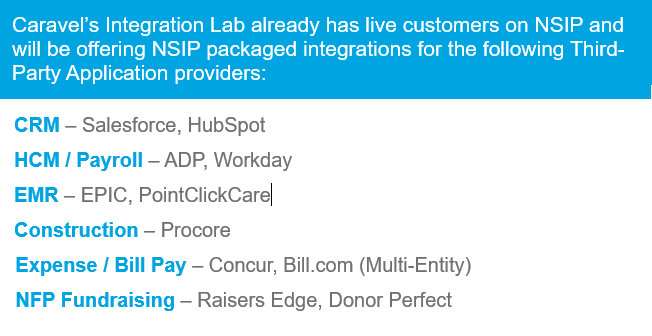
Caravel is excited to announce the expansion of its integration services with NetSuite Integration Platform (NSIP). This enhancement will allow customers to natively connect and centrally manage their Oracle NetSuite ERP environments to Third Party Applications leveraging built-for-Oracle technology.


Contact us today in the form below to learn how Caravel’s NSIP integrations can revolutionize your NetSuite integrations. 


NetSuite 2025.1 Release: Everything You Need to Know About the Latest Updates

As businesses continue to prioritize efficiency and productivity in 2025, NetSuite has responded with its latest release packed with powerful new features. NetSuite 2025.1 brings significant enhancements across the platform, from new connectors and procurement solutions to AI-powered tools and manufacturing improvements. Let’s dive into how these updates can help streamline your operations and boost your business performance.

More Connections to External Systems

NetSuite 2025.1 introduces three new connectors that will help you eliminate data silos and reduce manual data entry:

  • NetSuite Connector for Salesforce: This connector automatically shares data between NetSuite and Salesforce to accelerate your order-to-cash and revenue recognition processes. With aligned data in both systems, you’ll gain improved visibility into order records, customer insights, and financial data. Available in North America, this connector is powered by Oracle Integration Cloud, letting you set up and monitor data flows through a self-serve interface.
  • NetSuite Connector for Shopify B2B: Map data between NetSuite and the Shopify B2B ecommerce platform to streamline your operations. This connector syncs business customers, payment terms, and price lists, keeping NetSuite as your single source of truth for customer, catalog, inventory, and sales data.
  • NetSuite Connector for Microsoft Outlook: Keep your CRM records up to date by syncing emails and calendar events from Outlook with NetSuite CRM. This integration automatically creates and updates leads directly from Outlook.

Enhanced Procurement with SuiteProcurement

The 2025.1 release introduces NetSuite SuiteProcurement, an indirect procurement solution powered by Oracle Business Network (OBN). This new module helps you:

  • Track and control purchases of operating supplies
  • Increase accuracy by automating approval processes
  • Manage documents electronically
  • Shop on suppliers’ ecommerce sites with access to volume discounts

When making a purchase, SuiteProcurement creates a purchase request, initiates the approval process, and automatically transmits the order once approved. Amazon Business and Staples Business Advantage are the first supported suppliers, offering significant benefits to SuiteProcurement customers.

Streamlined Field Service Management

Field technicians and managers will benefit from several new features in NetSuite Field Service Management:

  • Automatic Time Bills: The system now automatically creates time bills based on the start and end times of each job, helping you track field service activity more accurately and reduce billing errors.
  • Bulk File Uploads: Technicians can now upload multiple files at once to the mobile app, saving valuable time when providing proof of work or documenting repairs.

Manufacturing Enhancements

NetSuite 2025.1 introduces two key tools to optimize your manufacturing processes:

  • NetSuite Manufacturing Scheduler SuiteApp: This tool helps production managers optimize production by allocating tasks across multiple work centers while considering constraints like operation duration, dependency sequences, and unique work center calendars.
  • Auto Serial Numbering SuiteApp: Automate serial number generation to improve traceability, simplify inventory management, and reduce manual errors. You can define unique serial number formats for different item codes and automatically assign them at every stage.

AI-Powered Reporting and Analytics

Finance teams will appreciate the new AI capabilities in NetSuite 2025.1:

  • NetSuite Narrative Reporting: This new feature in NetSuite Enterprise Performance Management (EPM) uses generative AI to quickly create narratives and explanations from your financial and transactional data.
  • Enhanced Cash Forecasting: NetSuite Cash 360 now incorporates amounts and due dates from installments to more accurately forecast cash inflow and outflow from customer invoices and vendor bills.

Improved Bill Capture and Financial Management

The 2025.1 release includes several enhancements to NetSuite Bill Capture:

  • Reference number column and duplicate detection warnings
  • Ability to add user notes that carry over to the bill
  • Option to remove uploads in bulk
  • Templates per subsidiary and vendor combination
  • Support for NetSuite SuiteTax, discounts, and payment holds
  • Side-by-side split view of uploaded files and generated bills
  • UK support when used with NetSuite SuiteTax

Additionally, NetSuite has expanded its bank connectivity with a new financial aggregator that allows connections to over 14,000 financial institutions in the US and Canada, including OAuth connections to over 700 banks.

Simplified Compliance and Grant Management

Compliance is easier with these new features:

  • NetSuite Compliance 360: Access new, reusable templates for recurring audits, enhanced audit documentation functionality, and improved user experience with intuitive visuals.
  • Grant Management SuiteApp: Add grant management functionality to any SuiteSuccess edition, including segments, records, KPIs, and reporting to support organizations that receive both commercial and government revenue.

Warehouse Management Improvements

NetSuite WMS gets several efficiency-boosting updates:

  • Break down larger pick tasks into smaller quantities
  • Replenish multiple bins using a cart
  • Import CSV files in bulk for bin transfer
  • Receive items in any configured unit of measure during a tally scan

Customer Experience Enhancements

The 2025.1 release brings several improvements to enhance your customer relationships:

  • Direct Invoice Payment Option: Generate invoices with email links that direct customers to your NetSuite SuiteCommerce site, allowing them to easily access and pay specific invoices.
  • Enhanced Customer 360: Access new charts, metrics, and lists to quickly get up to speed on a customer’s status and relationship history. New features include an opportunities and estimates tab, orders and returns tab, and an enhanced overview tab with more transaction types and dynamic sales headlines.
  • Theme Refresh for Commerce Solutions: NetSuite SuiteCommerce gets a facelift, improving usability and interface inclusivity.

Security and Development Updates

For developers and administrators, NetSuite 2025.1 includes:

  • End of SuiteSignOn (SSO) support, requiring transition to NetSuite as an OIDC Provider
  • End of support for RSA PKCSv1.5 (OAuth 2.0), requiring migration to the RSA-PSS scheme
  • New custom objects for prompts and Text Enhance actions in SuiteCloud Development Framework
  • Removal of the outdated Ext JS library to encourage migration to modern frameworks

Additional Enhancements

  • Specialized User Roles: Lower-priced licenses for users who only need access to specific records, reports, and features.
  • Enhanced Rebates Calculations: Calculate rebates on sales orders from NetSuite SuiteCommerce and based on data elements unique to individual operations.
  • SuiteTax Improvements: Better US tax reporting and support for combining time items and detail items on invoices and expense reports.
  • Workforce Management Features: New region-based override options for managing pay for noncompliant meal or rest breaks, plus pre-configured wage agreements for the hospitality and fast food industries in Australia.
  • Digital W2 Form Access: Employees can now access their digital W2 forms themselves through the employee center.

Getting Started with NetSuite 2025.1

NetSuite 2025.1 is rolling out in phases between February and April 2025. You can check your specific upgrade date in the New Release Portlet on your NetSuite dashboard. For hands-on access to see how these new features will work with your data, workflows, and customizations, don’t forget to request your Release Preview test account.


With these comprehensive enhancements, NetSuite 2025.1 provides you with the tools you need to increase efficiency, streamline operations, and stay competitive in today’s fast-paced business environment.

Caravel Wins Dual NetSuite Alliance Partner Spotlight Awards for Excellence in Services and Acumatica Switch

Prestigious recognition highlights Caravel’s commitment to delivering exceptional NetSuite implementation services and successfully transitioning clients from competing ERP platforms


Industry-Leading Excellence Recognized


We are proud to announce that Oracle NetSuite has honored Caravel with not one, but two prestigious recognitions in their Winter 2025 Alliance Partner Spotlight Awards. Our team has been named the Services Spotlight Award Winner and the Competitive Spotlight Winner for Acumatica Switch.


These awards represent the highest level of recognition within NetSuite’s partner ecosystem and highlight our team’s technical expertise, dedication to client success, and ability to deliver exceptional results.


“We are incredibly honored to be recognized as a NetSuite Spotlight Award Winner in multiple categories. This achievement reflects the unwavering commitment of our teams, who go above and beyond to provide our clients with the attention, expertise, and dedication required for successful projects across a wide range of industries. Our focus remains on delivering tailored solutions that drive growth and create long-lasting value for every client we serve.”


Tai Valenzuela, Senior Managing Director, Delivery & Operations


Setting the Standard in NetSuite Implementation


The NetSuite Alliance Partner Spotlight Awards are highly competitive accolades that recognize partners who demonstrate outstanding performance across several key areas:


  • Exceptional implementation services
  • Deep technical expertise
  • Proven client success stories
  • Specialized industry knowledge
  • Superior business process optimization


As a NetSuite Alliance Partner, Caravel provides comprehensive business consulting, integration, and implementation services that enable clients to extract maximum value from their NetSuite investment. Our team brings a unique combination of technical proficiency and business acumen that translates into measurable outcomes for our clients.


Leading the Way in Competitive Migrations


The Competitive Spotlight Award for Acumatica Switch specifically recognizes our expertise in helping businesses successfully transition from Acumatica to NetSuite’s more robust and scalable platform. This specialty requires not only technical migration skills but also change management expertise to ensure smooth transitions with minimal disruption to business operations.


Our proven methodology for competitive ERP migrations has helped numerous organizations modernize their business systems while preserving critical data and optimizing business processes.


About the NetSuite Alliance Partner Program


The NetSuite Alliance Partner program comprises an elite group of consultants and implementers who help NetSuite customers accelerate time to value. Alliance Partners are experts in their field with deep and unique understanding of NetSuite solutions, enabling them to deliver customized implementations that address specific industry and business requirements.


Looking Ahead


As we celebrate these achievements, we remain committed to expanding our NetSuite capabilities and delivering even greater value to our clients. We look forward to continuing our partnership with Oracle NetSuite and helping more organizations transform their operations through powerful cloud-based ERP solutions.


For more information about how Caravel can help your organization implement or optimize NetSuite, please contact our team at [email protected] or see the form below.

Fill out this form and one of our team members will be in touch shortly!

Privacy Overview

This website uses cookies so that we can provide you with the best user experience possible. Cookie information is stored in your browser and performs functions such as recognising you when you return to our website and helping our team to understand which sections of the website you find most interesting and useful.